

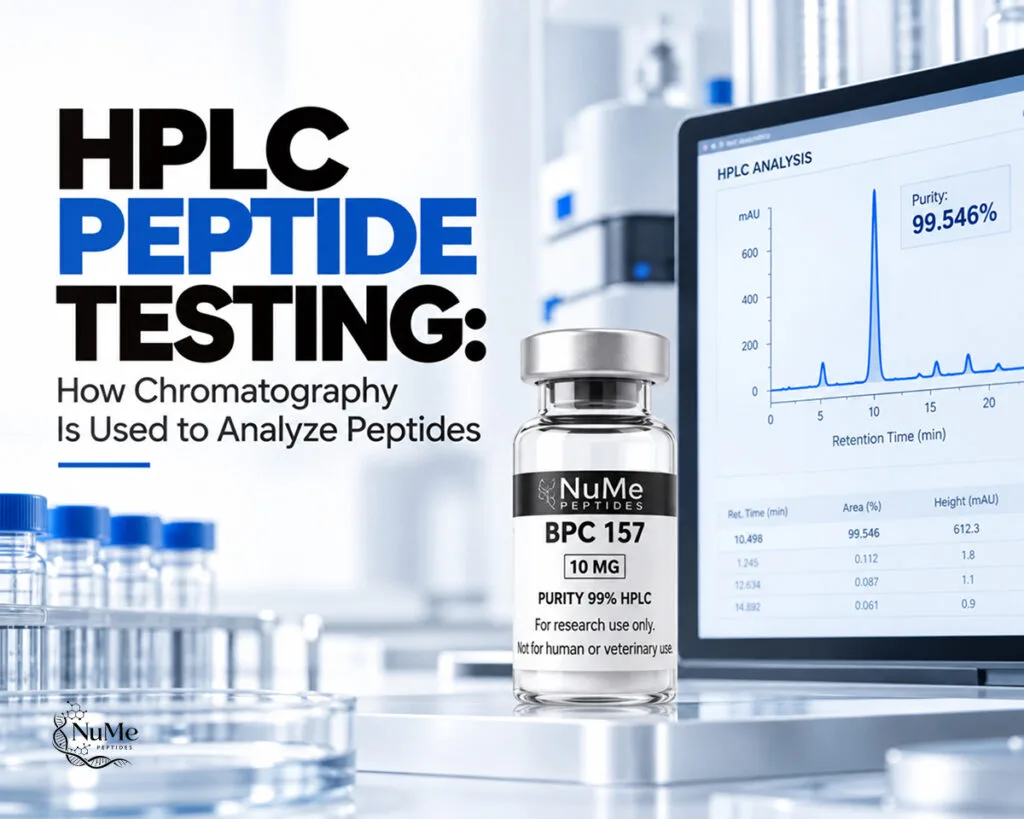
HPLC peptide testing is one of the most widely used analytical approaches in peptide science. High-performance liquid chromatography can separate […]
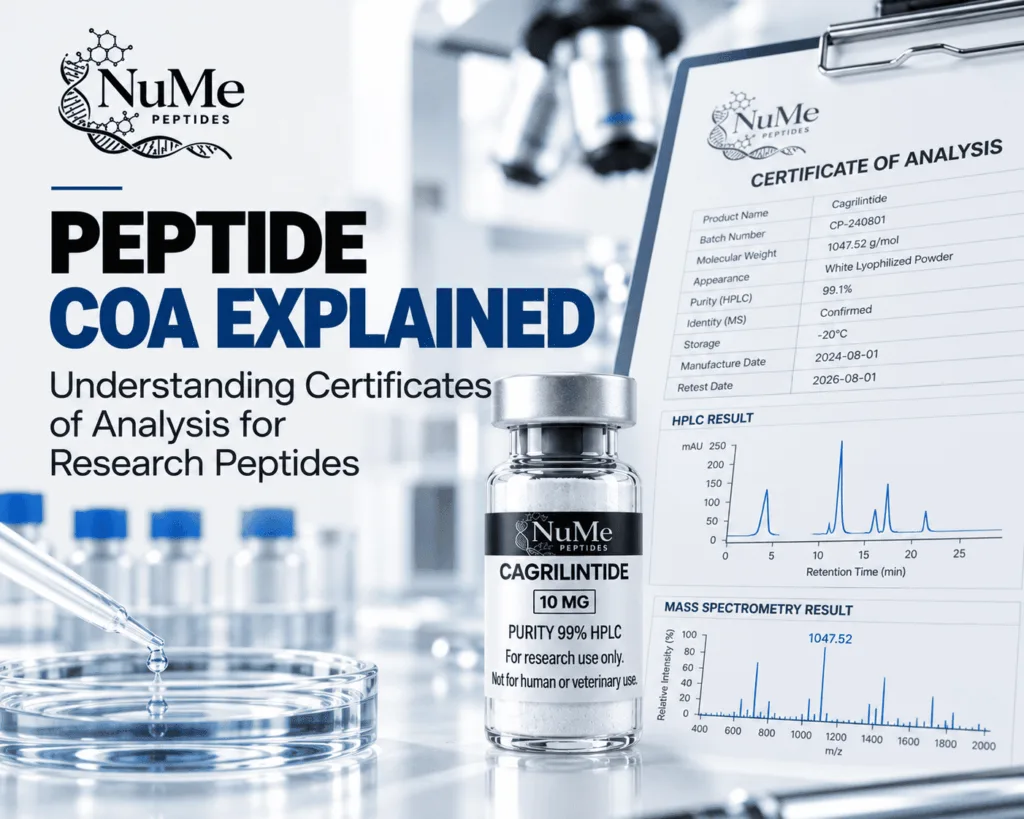
A Certificate of Analysis, or COA, is one of the most important documents researchers may review when evaluating peptide materials. […]
Evaluating a peptide for laboratory research requires more than checking a product name or a single purity percentage. The characteristics […]
Peptide suppliers often use terms such as “research grade,” “high purity,” or “laboratory use” to describe materials intended for scientific […]
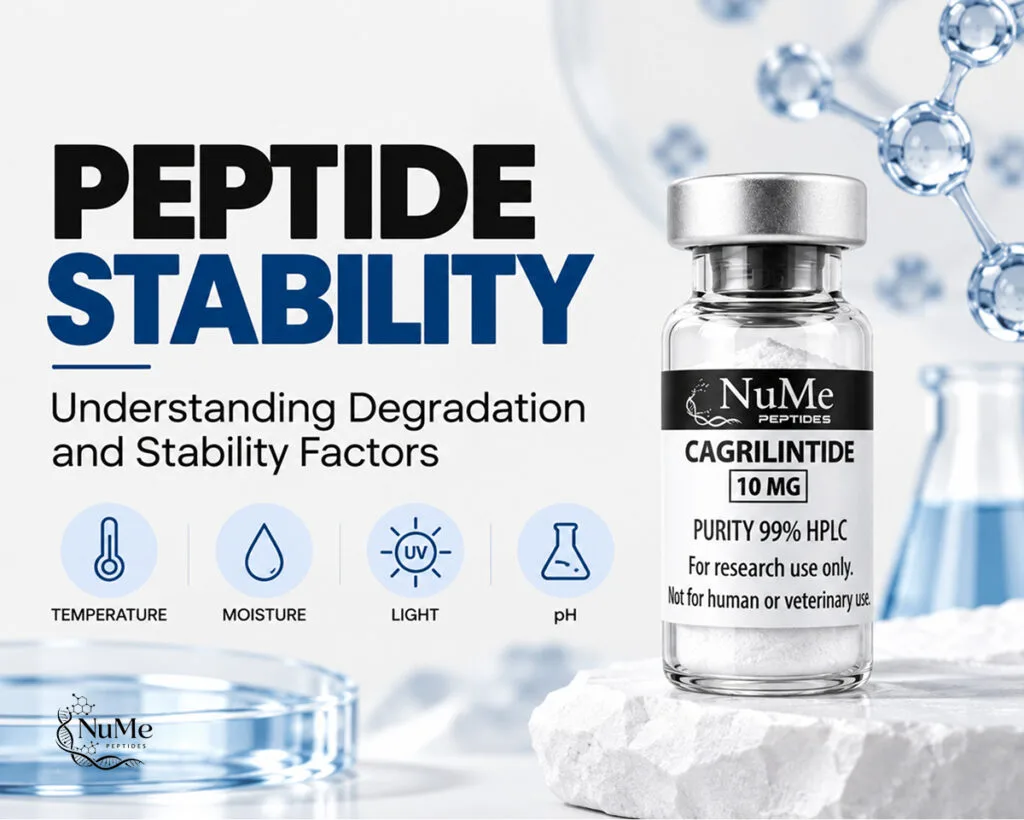
Peptides are dynamic molecules whose chemical and physical characteristics can change over time. Even when a peptide has been synthesized […]
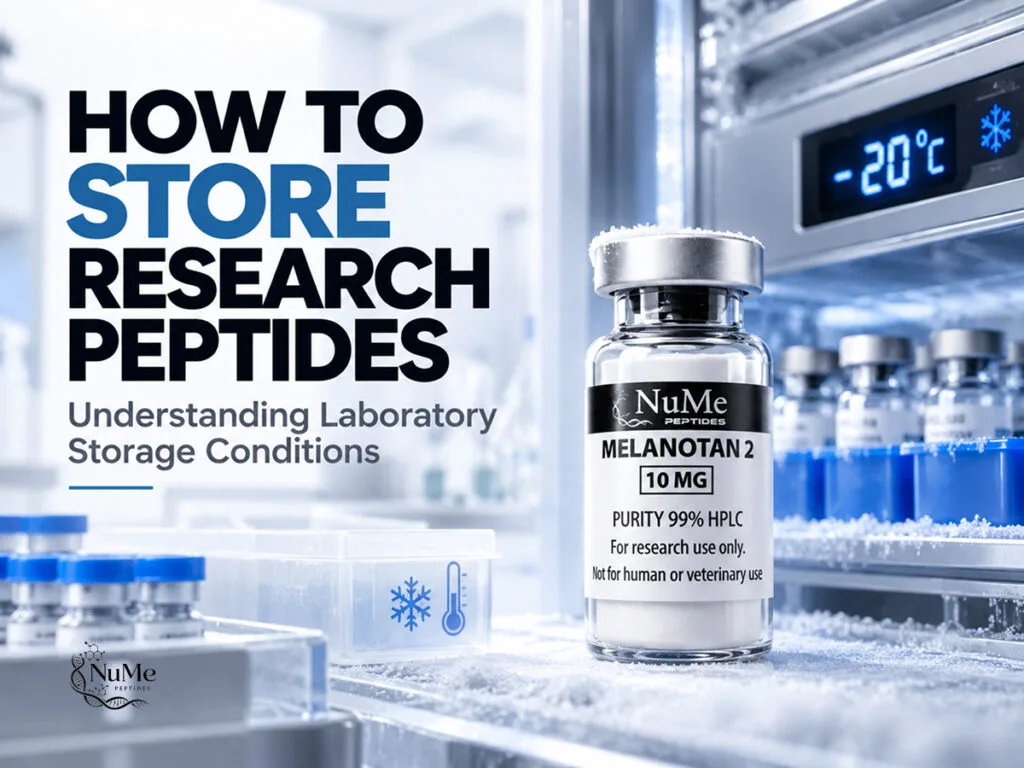
Proper storage is an important part of maintaining consistency in peptide-based laboratory research. A peptide may be correctly synthesized and […]
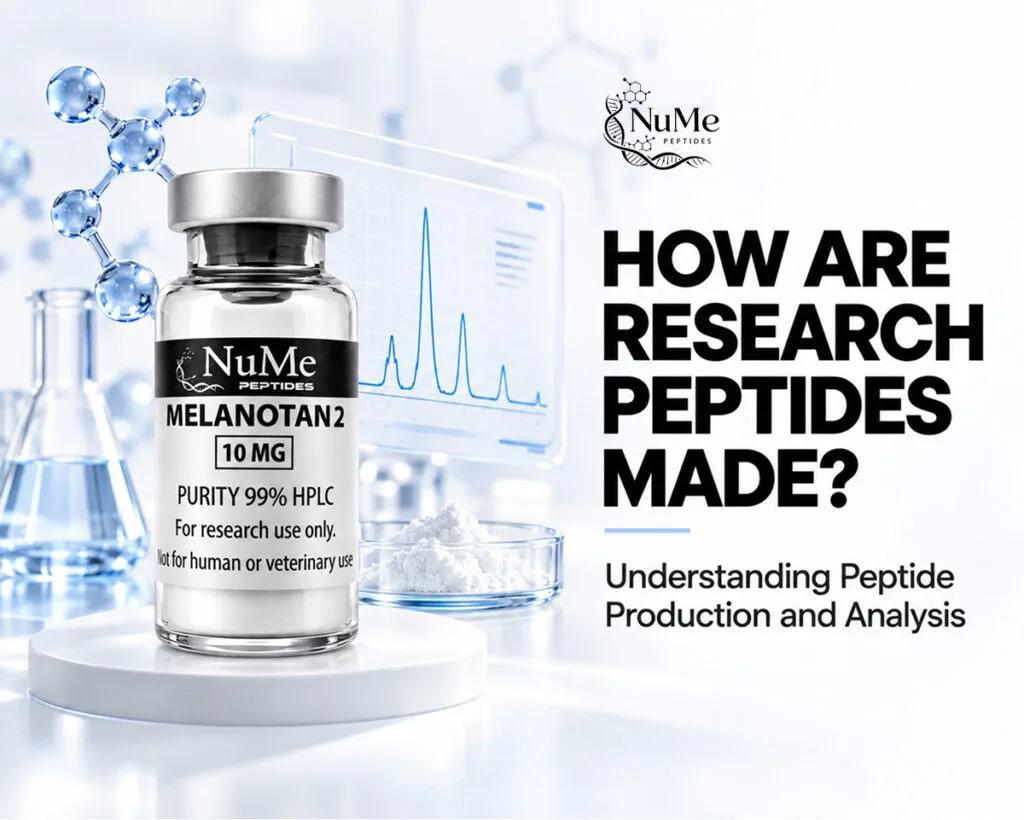
Research peptides are produced through carefully controlled chemical processes designed to assemble amino acids in a specific order and then […]
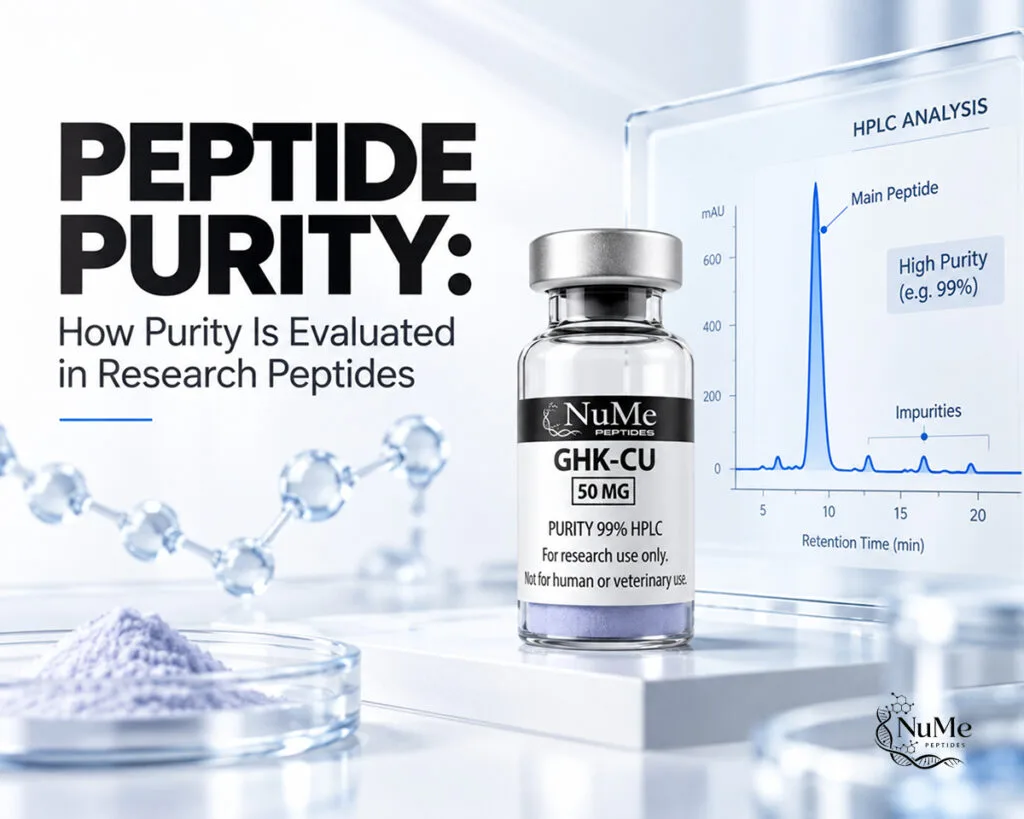
In peptide research, a purity percentage is often one of the first specifications researchers notice. A sample may be reported […]
Peptides are increasingly valuable tools across modern biological research because their relatively compact structures, sequence diversity, and ability to participate […]
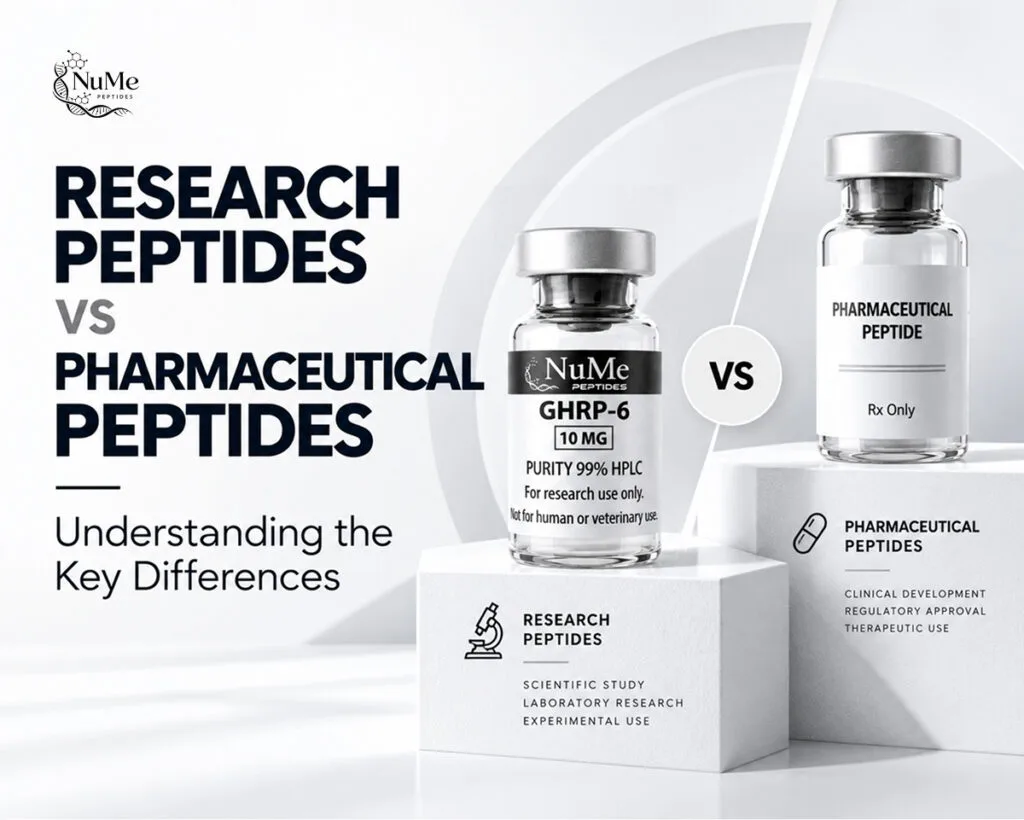
Peptides can appear in very different scientific and regulatory contexts. Some are produced as laboratory materials for controlled research, while […]